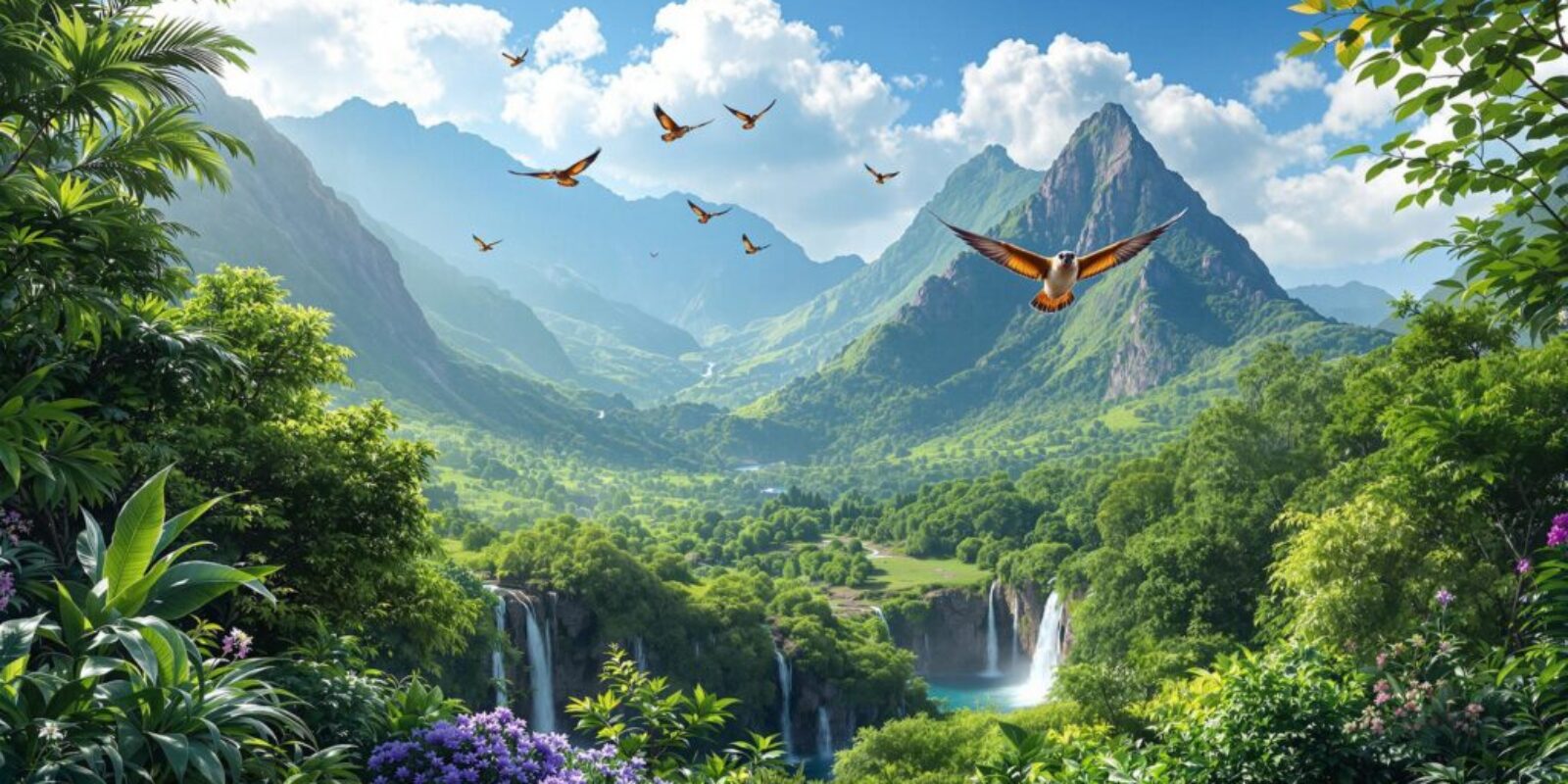
Mauritius has three national parks: the forested mountains of Black River Gorges, the dry coastal forest of Bras d’Eau and a scattering of small islands that make up the Islets National Park. Together they protect what is left of the island’s native forest and some of the rarest birds in the world. Here is what each park offers and how to visit.
Black River Gorges National Park
The largest and most visited park, created in 1994, covers about 67 km² of the hilly south-west, roughly 3.5% of the island. It protects much of the remaining native forest, as well as Black River Peak (Piton de la Petite Rivière Noire), the highest point in Mauritius at 828 metres.
Highlights
- Viewpoints: the Gorges viewpoint and Alexandra Falls, both reached in a few minutes from the Plaine Champagne road.
- Trails: from easy forest walks such as the Macchabée trail to the climb up Black River Peak. See hiking trails, our guide to mountains and family walks.
- Wildlife: endemic birds such as the Mauritius kestrel, the pink pigeon and the echo parakeet, all brought back from the brink of extinction, plus fruit bats, macaque monkeys and deer.
Visiting
Entry is free. The main entrances are the Pétrin visitor centre on the plateau and the Black River visitor centre near the coast. Trails can be muddy and slippery after rain, and the plateau is often cloudy and cooler than the coast, so bring a layer and good shoes. Start early and allow plenty of time to get back before dark.
Bras d’Eau National Park
A much smaller and quieter park in the north-east, near Poste Lafayette, created in 2011 and covering about 500 hectares. It protects one of the last areas of dry coastal forest on the island, alongside old plantations and historic ruins.
- A flat, easy trail of a few kilometres through the forest, with picnic tables.
- The Mare Sarcelle pond, where you can see waterbirds.
- Endemic birds such as the Mauritius paradise flycatcher.
Combine a visit with the beaches of Poste Lafayette and Belle Mare.
Islets National Park
Mauritius is surrounded by around 49 islets. Eight of them form the Islets National Park, the largest being Île d’Ambre off the north-east coast. They protect seabirds, reptiles and coastal plants, and the surrounding reefs and mangroves. Île d’Ambre can be visited by kayak or boat with local operators.
Not part of the national park, but well worth a visit: Île aux Aigrettes, a nature reserve off Mahébourg where the Mauritian Wildlife Foundation runs guided tours to see pink pigeons, giant tortoises and restored native forest.
Other places to see nature
- Ebony Forest, Chamarel: a reforestation project with walkways and viewpoints.
- Vallée de Ferney: native forest and easy trails in the south-east.
- La Vanille Nature Park: a private park in the south with giant tortoises and crocodiles, popular with families.
- Blue Bay Marine Park: coral gardens and snorkelling in the south-east. Groups such as Reef Conservation Mauritius work to protect the island’s reefs and seagrass.
When to go
The cooler, drier months from May to November are best for walking. In summer, go early in the morning before the heat and the afternoon showers. See our weather guide.
Visiting responsibly
- Stay on the marked trails and do not pick plants.
- Do not feed the monkeys or other animals.
- Take all your rubbish with you.
- Choose hotels and operators with recognised sustainability certifications, such as Green Globe, Travelife or EarthCheck.