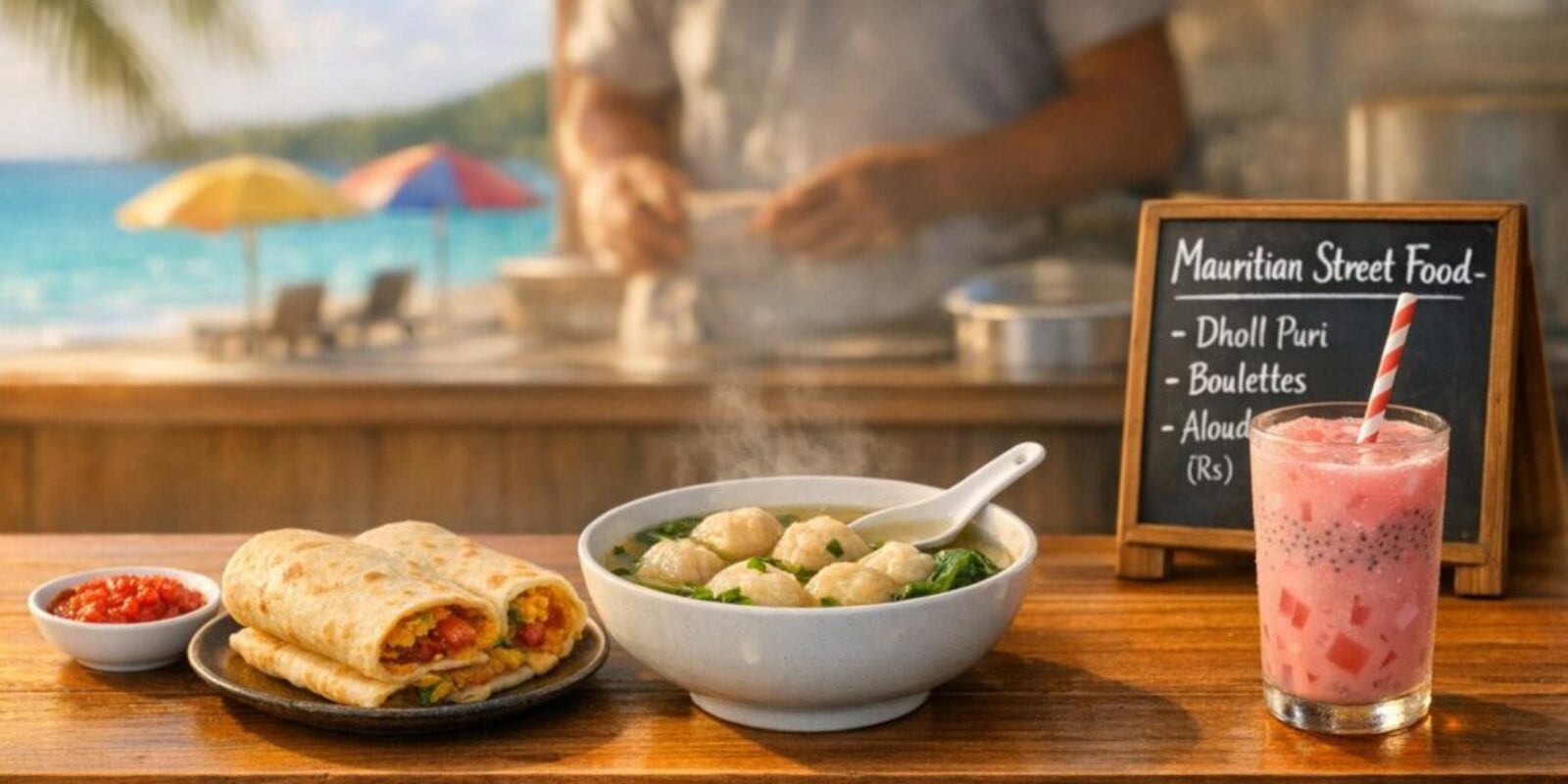
Mauritius offers a vibrant street food scene that blends influences from Indian, Chinese, Creole, and French cuisines. From dholl puri to alouda, the island’s street food is both affordable (often under $0.50) and deeply tied to daily life. Vendors are everywhere – markets, beaches, and bus stations – serving snacks, flatbreads, and desserts that reflect Mauritius’ diverse heritage.
Key highlights:
- Must-try dishes: Dholl puri, gato pima, boulettes, napolitaine cookies.
- Top spots: Port Louis Central Market, Rose-Hill Bazaar, Flic-en-Flac beach.
- Tips: Follow locals for the best vendors, carry small bills, and try multiple dishes.
Mauritian street food isn’t just about eating – it’s about connecting with the island’s flavors and stories. Whether you’re at a bustling market or relaxing by the beach, every bite is unforgettable.
Best STREET FOOD in Mauritius!! 🇲🇺 23 Meals – Ultimate Mauritian Food Tour! [Full Documentary]
sbb-itb-403574e
The Culinary Heritage of Mauritian Street Food
Cultural Influences on Mauritian Street Food: Dishes, Ingredients & Techniques
How Different Cultures Shape the Food
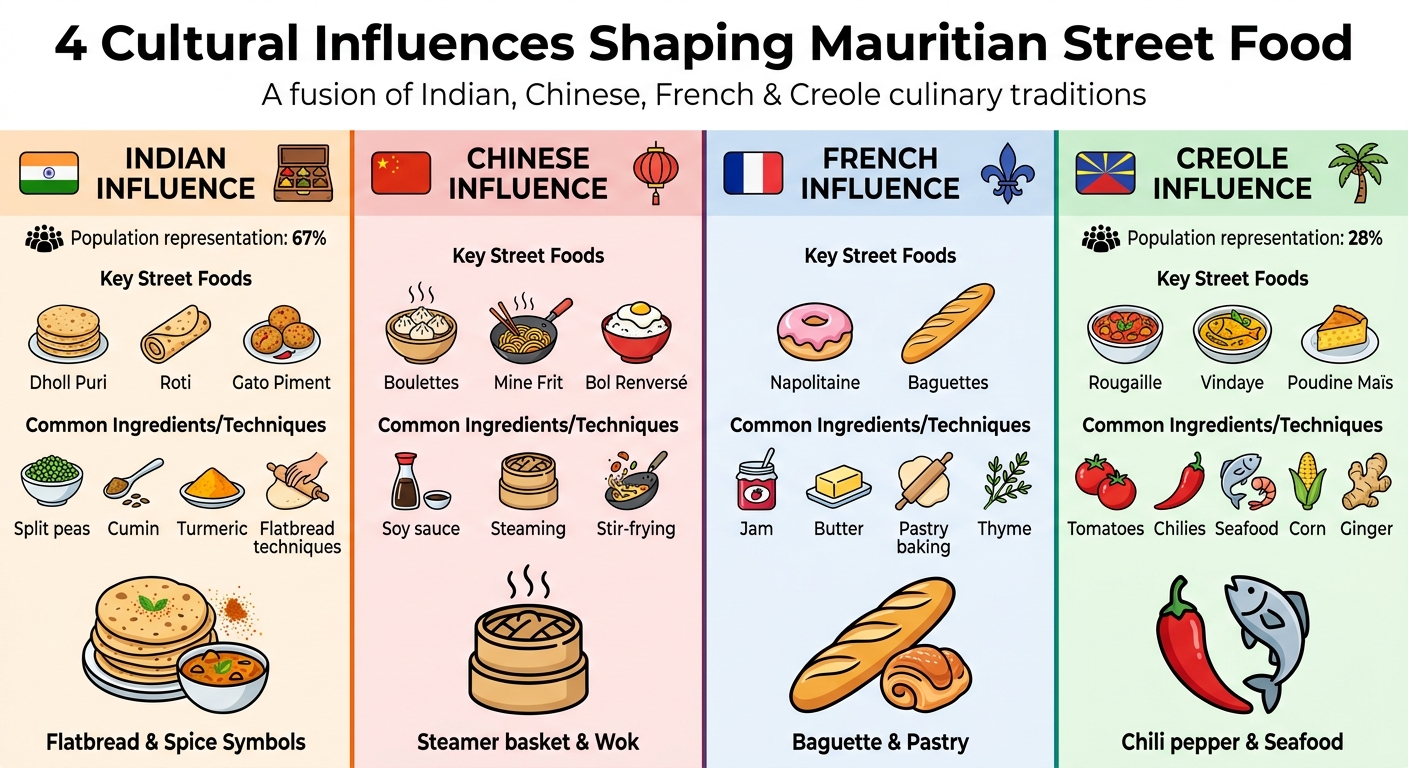
Mauritian street food reflects the island’s rich blend of cultures, shaped by centuries of migration and trade. Indian indentured laborers, who arrived in the 19th century and now represent about 67% of the population, brought with them flatbread-making techniques and spices like cumin and turmeric. Their influence shines in dishes like dholl puri and gato piment (chili cakes), which reimagine the Indian vada using local split peas and chilies.
Chinese immigrants from Guangdong and Meixian introduced cooking methods like steaming and stir-frying, leaving their mark on dishes such as boulettes (steamed dumplings) and mine frit (fried noodles). One standout creation, bol renversé – meaning "upside-down bowl" – is a Mauritian twist on Chinese-style rice dishes.
Creole cuisine, rooted in the African diaspora and representing about 28% of the population, highlights seafood, pulses, and corn. The well-loved rougaille, a spicy tomato-based sauce, is a staple across many street food offerings. French colonial influence also lingers, especially in baked goods like napolitaine (jam-filled shortbread cookies) and the use of herbs like thyme in curries. These curries differ from Indian versions by often skipping coconut milk in favor of heartier, herb-based flavors.
| Cultural Influence | Key Street Food Examples | Common Ingredients/Techniques |
|---|---|---|
| Indian | Dholl Puri, Roti, Gato Piment | Split peas, cumin, turmeric, flatbread techniques |
| Chinese | Boulettes, Mine Frit, Bol Renversé | Soy sauce, steaming, stir-frying |
| French | Napolitaine, Baguettes | Jam, butter, pastry baking, thyme |
| Creole | Rougaille, Vindaye, Poudine Maïs | Tomatoes, chilies, seafood, corn, ginger |
These culinary traditions don’t just flavor the food – they shape its cultural importance on the island, weaving together the stories of Mauritius’ diverse communities.
Street Food in Daily Mauritian Life
The influence of these historical culinary traditions is deeply felt in everyday Mauritian life. Street food is more than a meal – it’s an integral part of daily routines. Affordable and widely available, it provides sustenance for people throughout the day. Whether it’s grabbing roti or dholl puri for breakfast, munching on gato piment during a lunch break, or cooling off with a refreshing alouda (a sweet milk drink with basil seeds), street food is a constant companion in the lives of locals.
Beyond convenience, street food serves as a social bridge. Food carts and stalls bring together people from all walks of life, fostering a sense of community as they share meals and conversations. This vibrant street food culture is a testament to the island’s unity through diversity.
Where to Find the Best Street Food in Mauritius
Food Markets and Bazaars
If you’re looking to dive into the heart of Mauritian street food, Port Louis Central Market is the place to start. Open from 6:00 AM to 2:00 PM, this lively market buzzes with energy as vendors whip up fresh dholl puri, gateau piment, and samosas for both locals and curious travelers. Conveniently located near the Caudan Waterfront and the historic parts of the city, it’s easy to pair a visit here with a walking tour of Port Louis’ culinary landmarks.
For a more laid-back experience, head to Rose-Hill Bazaar or Centre de Flacq, where you’ll find authentic local dishes in a less touristy environment. These markets offer a glimpse into the island’s food traditions, minus the crowds. Another gem is the Mahebourg Market, especially lively on Mondays, where you can enjoy Creole snacks in a relaxed coastal village setting. The market’s waterfront location adds to its charm, making it a great spot to soak in the scenery while sampling the food.
For a taste of Sino-Mauritian flavors, check out Chinatown near the Port Louis waterfront. Known for its boulettes (steamed dumplings) and mine frite (fried noodles), this area comes alive during lunchtime as locals flock to the stalls. Don’t miss Rue Desforges, also in Port Louis, where vendors serve up Alouda, a refreshing milk-based drink, and flavorful Biryani. Pro tip: the longest lines usually point to the tastiest options!
Beach Street Food Spots
Mauritius’ beaches aren’t just for sunsets – they’re also perfect for street food. Flic-en-Flac is a favorite spot, especially in the evenings when the air fills with the aroma of grilled snacks and fresh fruits. Vendors with mobile carts and bicycles serve up seasonal treats right on the sand, creating a casual yet flavorful experience.
Over in Grand Baie, a bustling coastal hub, you’ll find a mix of fresh seafood and fried noodles along the waterfront. It’s a lively spot where street food meets scenic views. For something a bit more relaxed, the Mahebourg Waterfront is ideal. Here, you can enjoy fried snacks, boulettes in warm broth, and local drinks while taking in the ocean views. Most beach vendors operate on a cash-only basis, so it’s a good idea to carry small bills. Keep an eye out for stalls with the longest lines of locals – they’re often the best.
Local Favorites and Lesser-Known Spots
For a slice of everyday Mauritian life, bus stations (La Gare) are unbeatable. These hubs are home to high-turnover street food vendors, offering affordable and authentic eats. For example, spots like La Gare Snack and Grill serve up delicious, budget-friendly staples. Thanks to the island’s efficient bus network, many of these locations are just a 45–60 minute ride from the airport.
Whether you’re wandering through Port Louis markets or grabbing a quick bite near the beach in Grand Baie, the best rule of thumb is simple: follow the locals. And don’t forget to carry small bills, as most of these spots stick to cash-only transactions.
Must-Try Street Foods in Mauritius
Flatbreads and Wraps
Dholl Puri is often considered Mauritius’ national street food, celebrated for its bold and colorful flavors. This soft yellow flatbread, made with split peas seasoned with turmeric, is served warm and paired with butter bean curry, rougaille (a tomato-based Creole sauce), chutneys, and pickles. It’s a comforting and flavorful dish that’s a must-try for visitors.
Roti Chaud, also known as Farata, is a close relative of Dholl Puri but features a wheat-based dough. Sometimes layered with butter, it has a flaky texture that’s almost reminiscent of puff pastry. Vendors typically serve it with sautéed vegetables, bean curry, and rougaille. If you’re not a fan of spicy food, you can ask for a milder version to suit your palate.
Ready for more? Dive into the world of fried snacks that showcase Mauritius’ rich culinary influences.
Fried Snacks and Fritters
Mauritius’ street food scene is a blend of flavors and textures, and its fried snacks highlight the island’s cultural diversity.
Gato Pima (chili cakes) are a favorite among locals. These crispy yellow split pea fritters are mixed with chilies, spring onions, and curry leaves, making them perfect for a quick breakfast or an afternoon treat. Many enjoy them stuffed into a buttered baguette alongside a steaming cup of tea.
Samosas are another beloved street food, known for their flaky pastry filled with savory ingredients like spiced potatoes or minced meat. You’ll also want to try Gato Arouille (taro fritters), a dish with Sino-Mauritian roots. Made from grated taro mixed with ginger, salt, and sugar, these fritters are crunchy on the outside and slightly sweet on the inside. Other popular options include Gato Brinzel (eggplant fritters) and Pima Cari Frire (battered and fried chilies). Many of these snacks are vegetarian or vegan-friendly, often served with tomato chutney or green chili paste for an extra kick.
Desserts and Drinks
No street food experience is complete without sampling Mauritius’ sweet treats and refreshing beverages.
Alouda is the island’s signature drink. This creamy, sweet milkshake is made with basil seeds and grated agar-agar jelly, flavored with vanilla, rose, or almond. Inspired by the Indian falooda, it’s a favorite among locals, especially from vendors along Rue Desforges in Port Louis.
For something to nibble on, try Napolitaine cookies. These buttery, jam-filled biscuits are coated in pink icing and hold a nostalgic charm for many Mauritians.
If you’re in the mood for something lighter, Salade Confit is a refreshing option. This mix of seasonal fruits like pineapple, mango, or guava is dressed with tangy tamarind sauce, a dash of salt, and crushed chili for a sweet and spicy twist. Another refreshing treat is Glaçon Râpé, shaved ice topped with flavored syrups and condensed milk. And if you’re an early riser, look out for Poutou – steamed rice cakes topped with grated coconut, sold by market vendors. These simple yet flavorful desserts and snacks beautifully capture the essence of Mauritius’ diverse food culture.
Tips for Navigating Mauritian Street Food
Mauritius’ street food scene is a feast for the senses, offering bold flavors and a glimpse into the island’s rich culinary traditions. Here’s how to make the most of it.
How to Spot Quality Food Vendors
The best way to find top-notch street food? Follow the locals. If you see a crowd, it’s a good sign the vendor is serving something worth the wait. Another tip: look for vendors who prepare food right in front of you. It’s a clear indicator of freshness and hygiene. Don’t hesitate to strike up a conversation – vendors are often happy to explain their dishes and adjust spice levels to suit your taste.
"Most vendors prepare food fresh on the spot, and queues are always a good sign – locals know where the best bites are".
Once you’ve found a promising spot, timing your visit and understanding local pricing will help you enjoy the experience even more.
When to Visit and What to Expect for Prices
Timing matters when it comes to street food. Open-air markets like Flacq Market are busiest in the morning, and that’s when the food is at its freshest. You’ll also find popular snacks like gateaux piments (fried lentil cakes) available early in the day or during the afternoon tea hour.
One of the best parts of Mauritian street food? It’s incredibly budget-friendly. Most items range from $0.50 to $2.75 USD (about Rs 25 to Rs 125). A must-try is dholl puri, a beloved local dish that costs just 10–15 Mauritian Rupees per piece – less than $0.50 USD.
Dining Customs and Payment Methods
Keep small-denomination Mauritian Rupees handy, as most vendors operate on a cash-only basis.
Street food in Mauritius is designed for quick, on-the-go enjoyment. Before diving in, check how spicy the chutneys and sauces are – each vendor has their own take, and the heat level can vary. To explore a wider variety of flavors, consider ordering several small dishes to share. Communication won’t be an issue; most vendors speak English and French, making it easy to ask about ingredients or dietary needs.
Conclusion
Mauritian street food is the heartbeat of the island, weaving together Indian, Chinese, African, French, and Creole influences over centuries. From the beloved dholl puri (which you can often grab for under $0.50) to the bustling energy of Port Louis Central Market, these culinary experiences provide more than just a meal – they offer a window into the daily life, culture, and traditions of Mauritius. Every dish is a flavorful connection to the island’s rich heritage.
"Every meal tells the story of centuries of cultural fusion." – TourGrids
As TourGrids beautifully states, every bite here reflects the island’s history of cultural blending, making each meal a story in itself. What makes it even more special? It’s for everyone. Whether you’re watching a vendor expertly roll out flatbreads on a tawa or sipping a chilled, sweet alouda after indulging in a fiery snack, you’re stepping into a shared tradition that unites the people of Mauritius.
"Don’t just visit Mauritius – taste it. The memories you create through food will last long after your tan fades." – S. Krishnan, TourGrids
So, skip the tourist traps and follow the locals to discover vendors who put their own spins on classic dishes. Let every bite take you deeper into the heart of Mauritius. Manze bien!
FAQs
Is Mauritian street food safe to eat?
Mauritian street food can be a delightful and safe experience for tourists, provided you take a few simple precautions. Look for stalls that are bustling with customers – this usually signals fresh food and good hygiene. Go for hot, freshly cooked options like dholl puri or briyani, as these are less likely to pose health risks. And when it comes to drinks, stick to bottled or filtered water to avoid any issues. By keeping these tips in mind, you can savor the vibrant and delicious flavors of Mauritius with confidence.
How spicy is Mauritian street food?
Mauritian street food bursts with flavor, offering a mix of mild and spicy dishes shaped by Indian, Chinese, African, French, and Creole influences. Classics like dholl puri and briyani are typically seasoned with gentle spices, but street vendors often provide chili or hot sauces for those who crave an extra kick. This flexibility allows everyone, from fans of subtle flavors to spice lovers, to savor the island’s vibrant culinary scene.
What should I do if I have dietary restrictions?
If you have specific dietary needs, it’s important to communicate them clearly with street food vendors. Since street food is often made without formal processes, ask about the ingredients and how the food is prepared to make sure it aligns with your requirements. Seek out vendors who appear to follow hygienic practices or explore well-known markets where dietary preferences are more likely to be considered. For allergies or intolerances, sticking to dishes you know can help minimize potential risks.