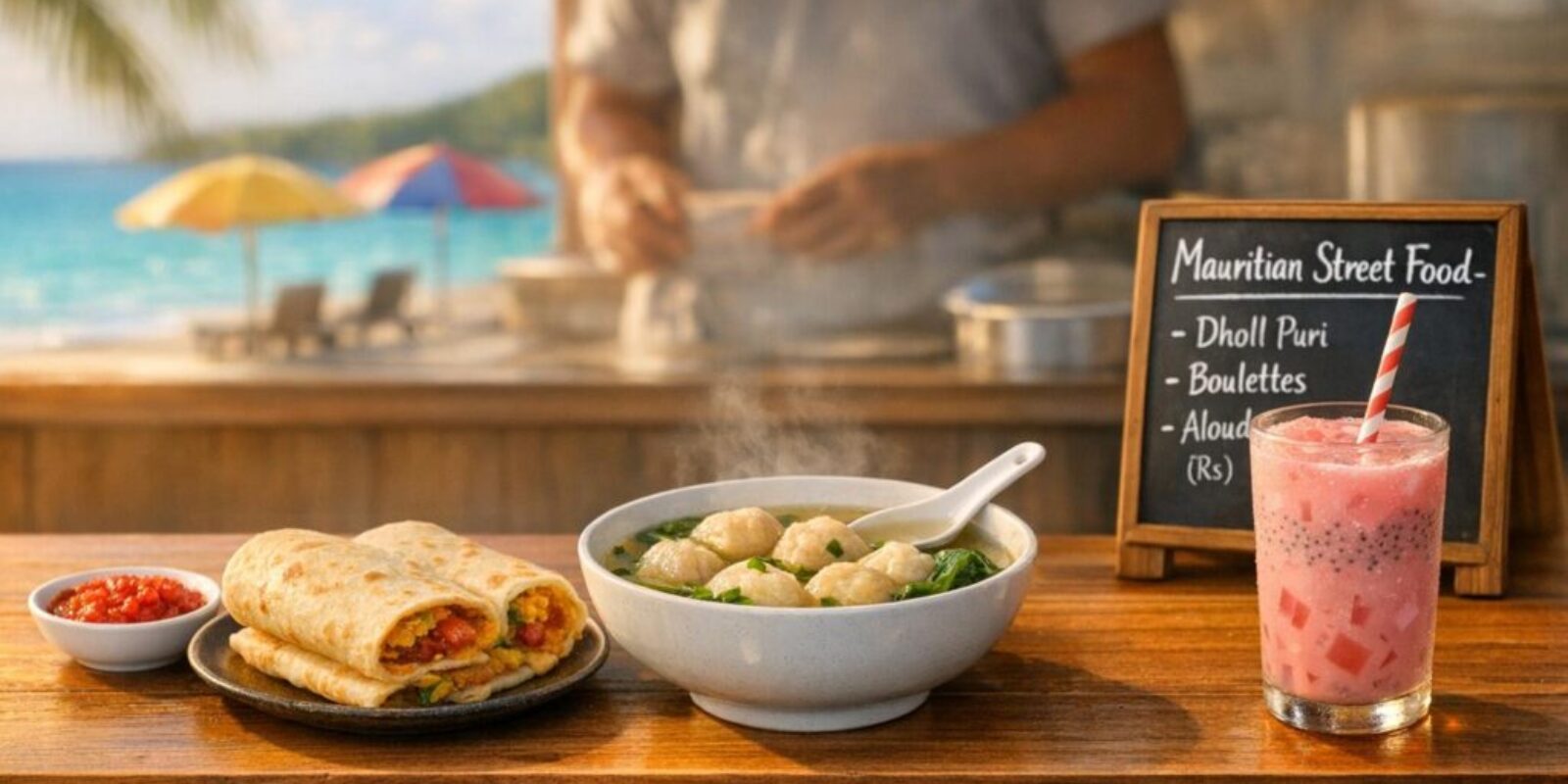
Street food is the cheapest and most honest way to eat in Mauritius. It grew out of the island’s mix of Indian, Creole, Chinese and French cooking, and you find it at markets, bus stations, school gates and beach car parks. Most snacks cost a few dozen rupees, so you can try five or six things for the price of one hotel cocktail.
Here is what to order, where to find it and what to know before you queue.
What to eat
Dholl puri
The island’s favourite snack. It is a thin flatbread made with ground yellow split peas, filled with bean curry, rougaille (a tomato sauce), pickles and chilli, then folded into paper. It is almost always sold in pairs. Expect to pay roughly Rs 20 to 40 a pair, depending on the stall and the fillings.
Farata and roti
Farata is the Mauritian take on paratha: a soft, layered flatbread served with the same curries as dholl puri. Roti is the plainer version. Many stalls sell both, and you can ask for a mix of fillings.
Gato piment
Small, crunchy fritters of split peas, chilli and spring onion. They are sold by the bag and are best straight from the oil. For a proper local breakfast, have them in a buttered baguette.
Other fritters
Look for samosas, gato brinzel (aubergine in batter), gato arouille (taro) and bhajias. They are cheap, filling and almost always vegetarian.
Boulettes
Sino-Mauritian steamed dumplings made with fish, chicken, prawn or chouchou (chayote), served in a clear broth with chilli sauce. You will find them in Port Louis’s Chinatown and at the food vans on the beaches.
Mine frit and mine bouille
Fried or boiled noodles, another Sino-Mauritian staple. A portion from a van makes a quick, cheap lunch.
Halim
A thick, spiced soup of lentils, wheat and meat, rooted in the island’s Muslim community. Port Louis has the best of it, especially around Plaine Verte.
Sweet things and drinks
- Alouda: a cold milk drink with basil seeds and agar jelly, usually flavoured with vanilla or rose syrup. Port Louis Central Market is the classic place to try it.
- Napolitaine: two shortbread biscuits sandwiched with jam and topped with pink icing.
- Gâteau patate: small sweet potato pastries, often filled with grated coconut.
- Glaçon râpé: shaved ice with bright syrup, sold on the beaches.
- Fruit with chilli salt: pineapple, green mango or guava, cut and sprinkled with salt and chilli. Sold at markets and on beaches.
- Coconut water and sugar cane juice: pressed or cut in front of you.
Where to find the best street food
Port Louis Central Market
The best single place to start. The food stalls sell dholl puri, farata, gato piment, samosas and alouda, and the lunchtime queues tell you which ones the office workers trust. The market is open every day, but Sunday is a short morning session. Go before midday on a weekday. After the market, walk to Chinatown for boulettes and Chinese pastries.
Rose Hill
Rose Hill has a reputation for some of the best dholl puri on the island. The Dewa family’s stall is the best known, and its queue is part of the experience. It often sells out by early afternoon.
Weekly markets
Smaller towns have market days, with food stalls alongside fruit, vegetables and clothes:
- Flacq: Wednesday and Sunday. One of the biggest open-air markets on the island.
- Mahébourg: Monday, on the waterfront.
- Quatre Bornes: Thursday and Sunday, mainly clothes and fabric, with snack stalls.
Market days occasionally change, so check locally before you make a special trip.
Beaches
Food vans line the public beaches, busiest at weekends when Mauritian families come for picnics. Flic en Flac is the best known, with vans selling noodles, boulettes, fried rice and burgers. Mont Choisy, Pereybère and the public beach at Belle Mare are good too.
Practical tips
- Bring cash. Stalls take rupees, ideally small notes and coins. Cards are rarely accepted.
- Follow the queue. A busy stall means a fast turnover and fresh food.
- Go early. Dholl puri and fritters are a breakfast and lunch thing. Popular stalls sell out by early afternoon.
- Chilli comes on request. Most stalls add it at the end. Say “sans piment” if you want it mild.
- Vegetarians eat well. Dholl puri, farata, gato piment and most fritters contain no meat. Halal food is easy to find.
FAQs
Is street food in Mauritius safe?
Generally, yes. Most of it is fried or cooked to order. Choose busy stalls, and carry hand gel, as there is rarely anywhere to wash your hands. If you have a sensitive stomach, go easy on cut fruit for the first few days.
How spicy is it?
The food itself is usually mild. The heat comes from the chilli paste and pickles added at the end, so you control it.
How much should I budget?
Most snacks cost Rs 10 to 60. A filling street-food lunch rarely comes to more than Rs 200 per person.